How I Furnished a Whole Apartment for Under $200: Notes From Tojinmachi's Second-Hand Circuit
There's a specific kind of panic that hits when you sign a lease in Japan and walk into your new place. No fridge. No bed. No table. In the US, we're spoiled by the expectation that an apartment comes with a stove, sometimes a fridge, and the vague promise that your stuff is arriving in a moving truck. In Tojinmachi, my moving truck was a bicycle with a basket, and my budget was whatever was left after the key money, the agent fee, and the insurance nobody warned me about.
That's how I found myself standing in front of a recycle shop at nine in the morning, holding a rice cooker that cost less than a latte back home.
The Circuit, Mapped
Tojinmachi doesn't have one big second-hand destination — it has a circuit, and once you learn it, furnishing an apartment becomes a scavenger hunt you actually want to win.
Start with the chain stores. Hard Off and its siblings (Second Street, Book Off — the whole "Off" universe) sit within easy reach of the neighborhood, and they're the backbone of any serious thrifting run. These places are where Japanese people sell their stuff when they move, and because people here tend to take immaculate care of their belongings, "used" often means "someone else opened the box."
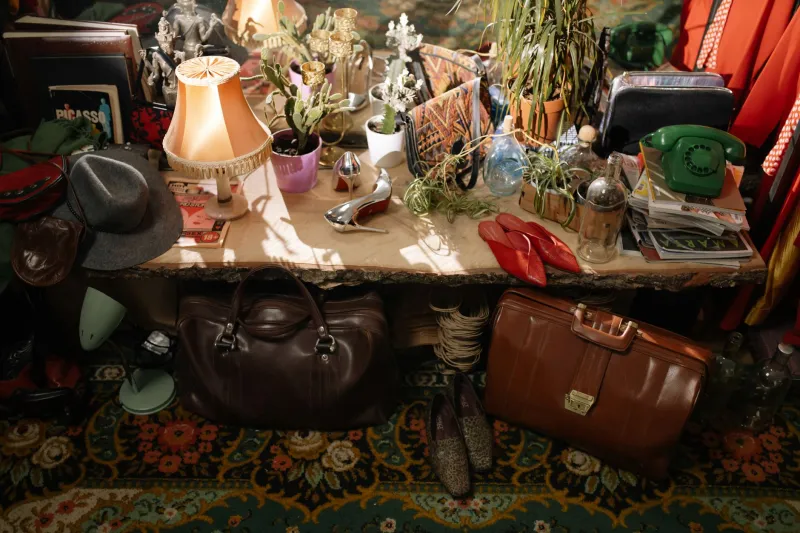
Then there are the smaller independent recycle shops scattered toward Nishijin and along the Muromi River side — the kind of places with handwritten price tags and a cat sleeping on a stack of old records. These are where the real finds live: a solid oak desk for ¥3,000, a set of six yunomi teacups for less than what a single mug costs at Target.
Finally, the flea markets. Fukuoka's community markets pop up around the neighborhood and nearby parks throughout the year, and they're less about furniture and more about the small stuff — dishes, lamps, kimono fabric, that one cast iron pan that will outlive us all.
The $200 Apartment, Itemized
Here's the honest receipt from my own run:
- Refrigerator (small, slightly dented, works perfectly): ¥6,000
- Futon set from a second-hand shop: ¥4,500
- Folding table (Japanese apartments are folding-furniture country for a reason): ¥1,500
- Two chairs: ¥2,000
- Rice cooker: ¥1,800
- Microwave: ¥3,500
- Dishes, pots, pan, utensils (a mixed grab-bag lot): ¥3,200
- Floor lamp: ¥1,200
- Bookshelf: ¥2,500
- Clothes from the used racks, because I also needed to be a person: ¥4,000
Total: around ¥30,000 — roughly $200. Could I have spent less? Yes, if I'd waited for a flea market or said no to the lamp. Could I have spent way more? Ask anyone who furnished their first Japanese apartment at Nitori in one panicked afternoon.
How to Quality-Check Like You've Done This Before
The chain shops do most of the vetting for you, but at independents and markets, you're the inspector. My checklist, learned through one regrettable blender purchase:
Plug everything in. Most shops have outlets for exactly this reason. A rice cooker that hums is good; a rice cooker that smells like burning is a story you'll tell later.
Open every drawer, lift every lid. Japanese furniture is often lighter and more modular than American stuff, which means it's also easier for parts to go missing.
Check the glass and ceramic for hairline cracks. Hold plates up to the light. Tea cups, too. Cracks in Japanese tea ware are sometimes intentional artistry (kintsugi aside, some are just damage) — learn the difference before you pay.
Smell test the soft goods. Futons are the one category where I'd spend more new if you can't find something aired out and fresh. A used futon with a smoky history is a roommate you didn't ask for.
The Etiquette of Chuko
Here's the thing that surprised me most: there's no haggling culture in Japanese second-hand shops the way there is at a US estate sale or a flea market in Austin. Prices are the prices. In a chain store, they're often negotiable through the app — items listed online sometimes drop if they've been sitting — but standing at the counter asking for a discount reads as odd, not savvy.
At flea markets, gentle negotiation is more acceptable, especially near closing time, but even then it's a soft art. A hopeful "hekkō desu ka?" with a smile goes further than a hardball counter-offer. And if a vendor throws in a freebie — which happens more than you'd think — accept it with both hands and a bow.
One more thing: when you're done with your second-hand treasures, the same rules apply in reverse. You can't just leave a sofa on the curb here. Bulky waste pickup (sodai gomi) requires a fee and a sticker, which is partly why the recycle shop ecosystem thrives — everything has a next owner, not a landfill. It's a system that quietly makes you a more thoughtful consumer. My dented little fridge will outlive my lease, pass through two or three more expats, and each of them will pay a little less than I did.
That's the real trick of the second-hand circuit. It's not just a way to survive a $200 budget. It's how an empty apartment in a foreign country starts feeling like it belonged to someone before you — and will belong to someone after.
If you're new to Tojinmachi and staring down an empty 1K this weekend: start early, bring a backpack, and don't skip the flea markets. The rice cooker is waiting.