Confessions of a Garbage Rookie: How I Finally Cracked Tojinmachi's Trash Code
Let me tell you about Mrs. Tanaka from the third floor. I never learned her first name, but I know her hands — because three weeks after I moved into my apartment in Tojinmachi, I caught her at the collection point, quietly opening my garbage bag and re-sorting it at 7 a.m.
I wanted to die. Instead, I took notes. Lots of them. Consider this my confession and my gift to you, wrapped in one very practical guide.
The Moment You Realize Trash Is a Personality Test
Back home in Ohio, garbage day meant one thing: drag the big bin to the curb, sometimes. Recycling was a bonus round, and honestly, half my building just tossed everything in together.
Fukuoka City runs on a different operating system entirely. Here, garbage is divided into categories — burnable, non-burnable, PET bottles, plastic packaging (what the city calls "shigen gomi"), cans, glass, and oversized items — and each category has its own designated collection day in your neighborhood. Miss the day? That bag sits at the collection point with your shame attached to it, because trash bags here are often semi-transparent and, yes, people can tell.
The rules aren't bureaucratic cruelty. Japan is a small, densely packed island with limited landfill space, and incineration is a major part of waste processing. The sorting system genuinely works. Once you internalize that, the rules start to feel less like a test and more like a civic ritual — like voting, but weekly, and with more banana peels.
Your First Month Cheat Sheet
Here's the distilled version of everything that took me four embarrassing weeks to figure out:
Burnable (moeru gomi): Kitchen scraps, paper that can't be recycled, tissues, food leftovers, chopsticks from konbini meals. Collected two to three times a week in most of Tojinmachi. Check the schedule posted at your collection point — or ask your landlord, who almost certainly has a laminated copy.
PET bottles: Only bottles with the PET mark. Rinse them, remove the cap and label (both go in plastic packaging), and use the designated collection bins, often near supermarkets like the ones along the Muromi River or near Nishijin.
Plastic packaging: This one broke my brain. Any plastic that held food — produce trays, snack wrappers, the film around your bento — gets rinsed and bagged separately. If it's plastic and it's packaging, it's probably this category.
Cans and glass: Rinsed, separate days. Small effort, big civic points.
Non-burnable (moenai gomi): Metal items, small electronics, broken ceramics. Collected less frequently — maybe once or twice a month. Mark it on your calendar.
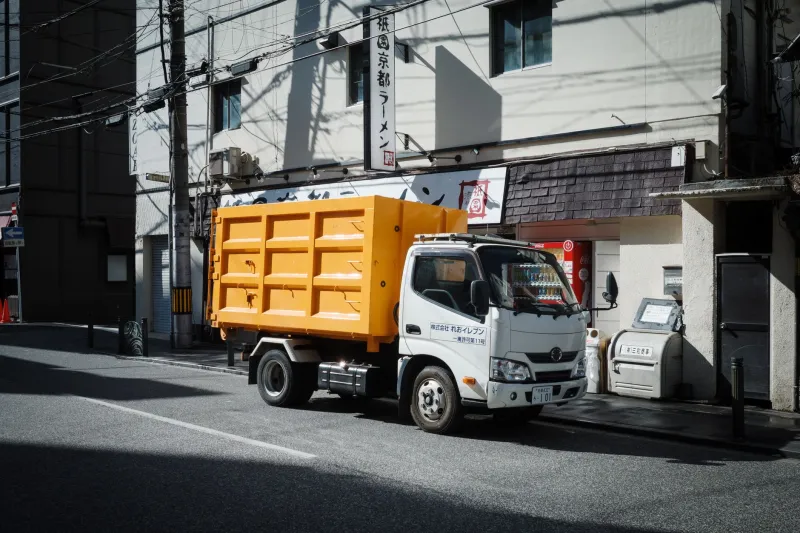
Oversized trash (sodai gomi): Furniture, bikes, anything bigger than roughly 30cm. You cannot just leave it. You call the Fukuoka City oversized waste center, buy a fee sticker at a konbini, and schedule a pickup. Dumping a futon at the collection point at midnight is a fast track to being That Foreigner.
Pro move: buy the city-designated garbage bags where required, and keep a small sorting station near your sink. Three stacked bins from Daiso changed my life.
The Gray Areas That Will Haunt You
Is a plastic umbrella burnable? (Yes, usually.) What about a broken mug? (Non-burnable.) Your dead umbrella's metal ribs? (Non-burnable, and honestly, maybe oversized depending on the mood of the schedule.)
Fukuoka City publishes an English garbage sorting guide — search "Fukuoka City garbage division English" — and it's genuinely good. There's even an app. When in doubt, the golden rule locals follow: if it burns cleanly, it's burnable; if it's plastic that touched food, rinse it and sort it as packaging.
And here's the etiquette piece no guidebook mentions: put your bag out by 8:30 a.m. on collection day, not the night before. Crows in Fukuoka are basically feathered raccoons with graduate degrees in bag-opening, and an early bag means scattered garbage and angry neighbors.
What I'd Tell Past Me
The morning I spotted Mrs. Tanaka re-sorting my bag, I did the most American thing possible: I panicked and bowed about fourteen times. She just smiled, held up a plastic tray I'd thrown in the burnable bag, and said "plastic" in the gentlest tone I've ever heard from someone elbow-deep in my ketchup-stained wrappers.
Now I leave perfectly sorted bags, and sometimes she leaves me a thumbs up. That's the thing about Tojinmachi — the rules are strict, but the people enforcing them are on your side. Sort it right, sort it on time, and garbage day stops being a contact sport. It becomes just another small way this neighborhood quietly holds itself together.
Your tiny kitchen, your tiny trash bags, your first month of small humiliations. Totally worth it.