Free Is a Lifestyle Here: Hunting Down Tojinmachi's Best Giveaways, Samples, and Bulletin Board Gold
Back home in the States, 'free' usually means someone wants your email address. In Tojinmachi, free means someone handed you a pocket pack of tissues with a real estate ad on it, no strings attached, and honestly? You'll use those tissues. This is a neighborhood that runs on a low-key economy of giveaways, and once you learn to spot them, you'll wonder how you ever paid full price for anything.
So consider this your treasure map. No X marks the spot, but there's definitely a free sample of sausage at the end of it.
The Tissue Pack: Japan's Original Freebie
Let's start with the one you'll encounter first. Outside Tojinmachi Station, near the supermarket entrances, and along the Muromi river path on weekends, you'll find people distributing little paper packs of tissues with advertisements printed on the wrapper. This is a marketing tradition that predates the internet, and it survives because it works — Japanese households go through these things like crazy.
As a newcomer, these are more valuable than they look. The ads inside are for local real estate agencies, clinics, and services, many with English or simple Japanese you can actually parse. I found my first dentist through a tissue pack. Take the tissue. Read the ad. That's the whole transaction. Nobody wants your phone number.
Supermarket Sample Stations: Free Lunch, Technically
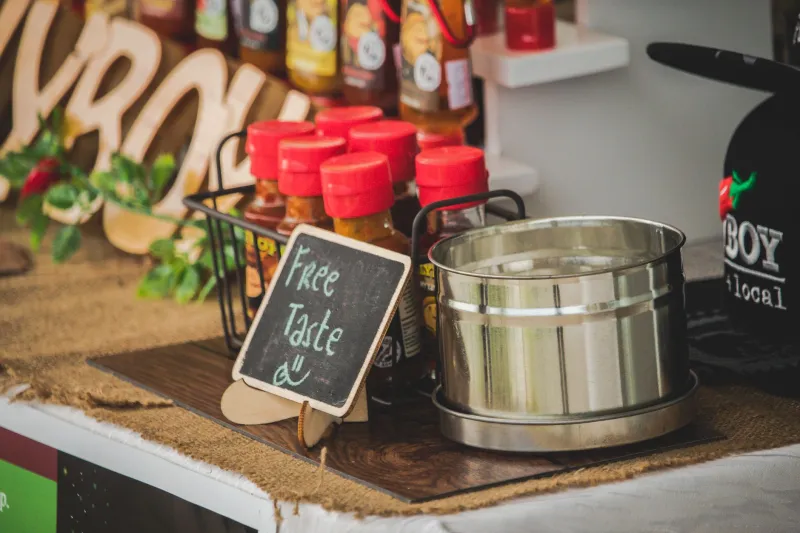
The big supermarkets around the neighborhood — and you know the ones — run demo stations, usually late morning through early evening on weekends. A staff member in an apron grills a sausage, pours a cup of a new tea, or hands out cubes of some new dessert, and you're welcome to try it. No purchase required, no guilt necessary.
A few tips from a seasoned sampler:
- Timing matters. Hit the demo corner between 11 a.m. and 1 p.m. on Saturday for maximum variety. By 5 p.m., the toothpicks are picked clean.
- Say 'arigatō gozaimasu' and make eye contact. Sample ladies remember friendly faces, and yes, they will give you a bigger piece next time.
- It's a meal-planning oracle. Whatever's being sampled is usually on sale that week. Free taste test plus a discount? That's how frugal expats eat well on the cheap.
The Bulletin Board Economy
Every neighborhood has its analog social network, and in Tojinmachi it lives on the community bulletin boards near the station, the post office, and the entrance to the shopping arcade. Here's what you'll find pinned up there:
- Ward office notices for free or nearly-free events: health checkup days, disaster preparedness drills (they sometimes hand out actual gear), and kids' festivals with free snacks.
- Giveaway posts. In Japan, there's a culture of leaving out items you no longer need — marked 'muryō' (free) — and bulletin boards often point to where. Furniture, dishes, kids' bikes. Someone's moving out is your lucky day.
- Local class flyers for everything from ikebana to English conversation exchange, which is free in the way that friendship is free.
Snap a photo of the board when you pass it. Half the neighborhood's best opportunities are posted there weeks before they'd ever appear online.
Free Health Checkups: The Best Deal Nobody Talks About
Here's something that would cost you a $200 copay back home: Fukuoka City runs basic health checkup days — blood pressure, blood work, sometimes even chest X-rays — for residents, often at little to no cost depending on your age and ward. These are advertised on those bulletin boards and in the ward newsletter (the 'kōhō,' which arrives in your mailbox and is 90% incomprehensible and 10% gold).
Bring your health insurance card, expect a bit of a line, and leave with a full workup and usually a small freebie — a towel, some hand sanitizer, occasionally a box of the aforementioned tissues. The expat community Facebook groups usually flag the English-friendly sessions, so keep an eye out.
Flyer-Only Apartment Deals
If you've read our housing coverage before, you know we think Tojinmachi's rent prices already beat Tenjin comfortably. But there's a second, sneakier layer: the deals that never make it to the listing websites.
Small local real estate offices in the neighborhood keep paper flyers for units that are either too new to be photographed or too quick-moving to list. Some of these carry 'initial cost waived' deals — no key money, reduced agent fees — because the landlord just wants the unit filled. This information lives on paper counters inside the offices and, you guessed it, on the bulletin boards.
Walk into one of the small agencies, say you're looking ('hey, fudōsan o sagashite imasu' gets you started), and flip through the binder on the counter. It costs nothing to look, and the binder is always better than the website.
Why This All Works (And Why Americans Love It)
Part of what makes the freebie circuit so satisfying is that it's the opposite of how 'free' works in the US. Nobody's harvesting your data. There's no tip jar, no subscription tier, no 'free trial' that converts to $14.99 a month. It's just a neighborhood where businesses and the ward office have decided that small giveaways build goodwill, and they're right.
Start small. Take the tissues. Try the sausage. Read the board by the station. Within a month you'll have a free towel drawer, a dentist, and possibly a barely-used rice cooker from someone who moved to Singapore. That's not just saving money — that's living here.