Midnight, a Can, and a Bench: Tojinmachi's Vending Machines Are the Best Bar Nobody Owns
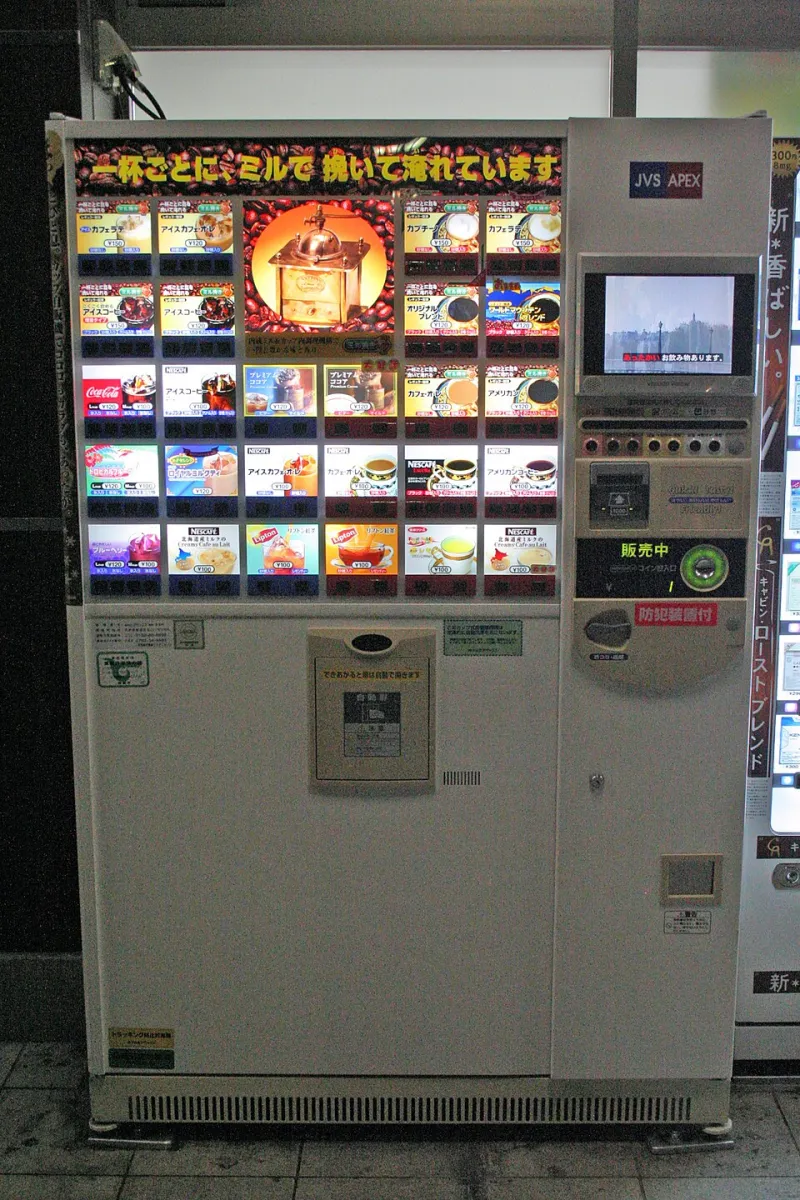
Photo: Corpse Reviver, CC BY-SA 3.0, via Wikimedia Commons
There's a moment that happens in every American city around 11 p.m. The kitchen's closing, the bartender is giving you the look, and your options collapse to one: go home. In Tojinmachi, that moment doesn't exist. Not because the izakaya stay open later (some do), but because the neighborhood itself never fully stops pouring. It just hands the job over to machines.
I'm not talking about the soft drink units outside the konbini. I mean the after-dark machines — the ones that glow a little differently, stock things you can't buy at 2 p.m. in a grocery store, and seem to have been installed by someone who understood that a neighborhood like this one deserves a drink within sixty seconds of wanting one.
First, the Pitch: A Vending Machine Is Just a Bar With No Small Talk
Hear me out. A good bar gives you three things: a cold drink, a place to sit, and a low-stakes social atmosphere. A vending machine gives you the first two for about 190 to 500 yen, and the third comes free in the form of whoever else wanders by. There's no tab, no tip, no twenty-minute wait for a server to notice you. For an American used to dropping $15 on a cocktail plus gratuity, the math alone is a small revelation.
But the real argument isn't price. It's that these machines are placed like bar stools — right where the neighborhood actually breathes. Outside shuttered shops. Along the walk home from the station. Near benches facing the Muromi. Someone, decades ago, made a decision about where people pause, and the machines have been honoring it ever since.
The Machines Worth a Midnight Walk
I've done the fieldwork so you don't have to do it thirsty. Five stops, roughly an evening's stroll.
1. The Dry Cleaner Classic. There's a machine outside a dry cleaner that closed hours ago, and honestly might have closed years ago for all its signage matters. It sells cold lemon sours and a rotating cast of cheap beer, and it has the slightly dusty, deeply lovable energy of a dive bar that never got a Yelp page. This is the machine I send first-timers to. It sets the tone: nothing fancy, everything cold.
2. The Sake Cup Corner. A few blocks over, a brighter unit stocks little single-serve cups of regional sake — the kind of thing you'd pay triple for at an airport. Grab one, walk two minutes toward the water, and you're having a riverside tasting flight for the cost of a vending machine snack. If you've ever wanted to compare a Junmai from Saga against one from Nagano without committing to a full bottle, this is your spot.
3. The Station Perimeter Unit. The machine cluster nearest the station is the social one. Salarymen decompress here, night-shift folks refuel here, and if you stand around long enough with a can, someone will nod at you. That nod is the Tojinmachi equivalent of "come here often?"
4. The Parkside Fallback. Near the green space on the Ohori side, a reliable old unit serves the post-walk crowd. It's the machine equivalent of a neighborhood bar that always has your brand — unremarkable in the best way, and there when nothing else is.
5. The Wildcard. I won't give the exact location of this one, because part of the fun is that it seems to change stock based on some logic no human has decoded. One week it's chuhai in flavors that don't exist elsewhere. The next week, hot corn soup in July. Treat it like a gacha game.
Bench Etiquette: How to Drink Like You Live Here
Japan's open-container norms are famously relaxed compared to the US — no open bottle laws, no side-eye from passersby. But relaxed isn't the same as anything-goes. A few unwritten rules I've absorbed, sometimes the easy way:
- Buy from the machine you drink near. It's the neighborhood's version of the "customer bathroom" courtesy.
- Benches are shared, not claimed. Sit at one end, leave space, nod if someone joins.
- The can goes in a nearby bin or comes home with you. Never, ever on the ground. Tojinmachi's streets stay clean because everyone acts like it's their own front porch.
- Quiet voices after ten. The buildings are close and the neighbors are closer.
- The empty can goes back. Many machines have a recycling slot right beside them. It's a two-second ritual that says you get it.
Why This Matters More Than It Should
You could read this as a quirky listicle about vending machines. But I think it's actually about why Tojinmachi works at night. The drinking culture here isn't confined to doorways with covers and last calls. It's distributed across the sidewalks, in glowing boxes and on river benches, which means the streets stay gently populated and safe-feeling well past midnight. Nobody's stranded between venues. The whole neighborhood is the venue.
For American visitors, it takes a night or two to stop feeling like you're getting away with something. You're not. You're participating in a system that's been running quietly for decades — one machine, one bench, one cold can at a time.
So skip the reservation you don't have. Take the walk, find the glow, and raise a 300-yen lemon sour to the best bar in Fukuoka that nobody owns.