Your Tiny Kitchen Called: A Realistic Grocery Run Through Tojinmachi's Supermarkets
My first grocery run in Tojinmachi was a disaster, and not because I couldn't read the labels. It was because I shopped like I still lived in Texas. I grabbed a gallon of milk, a family pack of chicken, a bag of chips big enough to use as a flotation device — and then I got home to my 1K apartment and realized none of it fit anywhere. The fridge was roughly the size of a microwave. The freezer was a rumor.
That's the first thing to understand about grocery shopping here: the entire supply chain, from the store to your kitchen, is built around buying small and buying often. Once you accept that, it stops being a compromise and starts being kind of great.
The Lay of the Land: Four Stores, Four Strategies
Tojinmachi doesn't have a megamart, and you won't miss it. What it has is a handful of supermarkets within a ten-minute walk of the station, each with a distinct personality.
The value player. There's a discount-oriented chain a few blocks toward Muromi where the produce is a notch less pretty and the prices are a notch lower across the board. This is where you buy your staples: rice, eggs, tofu, bananas. The eggs come in packs of ten, not twelve, and cost around $2.50. A block of silken tofu is about a dollar. If you're converting your first paycheck into yen and feeling nervous, start here.
The quality player. Closer to the station, a slightly pricier supermarket with better-prepared foods, a genuinely good bakery section, and a meat counter where the staff will cut portions small enough for one person. This is your date-night-ingredient store. Chicken thighs for two run about $4. Salmon fillets, skin-on and cut Japanese-style (thinner than you're used to), go for $3 to $4 each.
The late-night markdown machine. This is the one that changed my life. Sometime around 8 p.m., the bento and prepared-food section starts slapping yellow discount stickers on everything. I'm talking $7 bento boxes marked down to $3.50. Fresh-fried karaage at half price. The sweet spot is 8 to 8:30 p.m. — late enough for the good stickers, early enough that the good stuff hasn't been picked over. I've built entire dinners around this window.
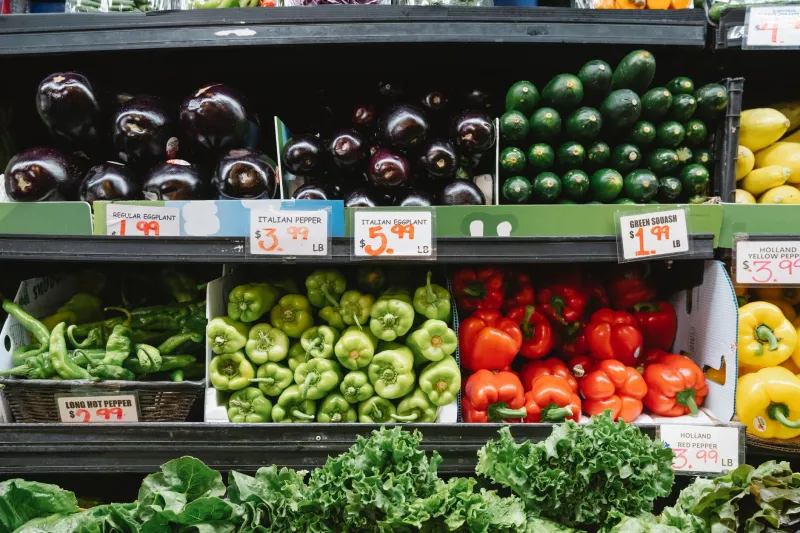
The specialty stops. Scattered between the big stores are the little shops Americans won't recognize: a greengrocer with produce stacked in wooden crates, a tofu shop that sells it still warm, a tiny liquor store with a surprisingly deep sake shelf. Prices at the greengrocer run slightly higher than the supermarkets, but the quality is better and the portions are right-sized. You can buy a single perfect tomato. Nobody judges you.
What Your Week Actually Costs
Let's do a real run, converted at roughly ¥150 to the dollar. For one person, cooking dinner most nights:
- Rice, 2kg bag: $9 (lasts a month)
- Eggs, pack of 10: $2.50
- Chicken thighs, three pieces: $4
- Salmon, two fillets: $7
- Tofu, two blocks: $2
- Mixed vegetables (cabbage, carrots, bean sprouts, negi): $6
- Soy sauce, mirin, and miso (the starter kit — buy once): $15
- Fruit, seasonal: $5 (yes, fruit is expensive here; consider it a treat, not a staple)
- One discounted bento for the night you give up: $3.50
That's roughly $40–45 for the week if you're starting your pantry, and closer to $25–30 once you own the condiments. Compare that to what I used to spend on takeout in Seattle and it's not even close. The real savings, though, come from the rhythm of it: shop every two or three days, buy only what you'll cook by Friday, and let the evening markdowns cover your lazy nights.
What to Skip (Learned the Hard Way)
Bulk anything. The membership warehouse stores exist in Fukuoka, but unless you're feeding a family of five with a full-size fridge, you're buying a second refrigerator to store your savings.
Western cheese. It's available, it's fine, and it costs roughly what it would cost to mail yourself a cheese wheel from Wisconsin. Buy it for special occasions, not weekly.
Giant bags of salad. The dressing packets here are tiny, the salad bags are tiny, and everything is portioned for a few days. If you see an imported family-size option, your crisper drawer will not thank you.
Pre-cut fruit. Beautiful, convenient, and priced like jewelry. Cut your own melon like an adult.
Small Kitchen, Small Habits
A few things that make cooking in a compact Tojinmachi kitchen actually work: buy a single good frying pan (20cm is plenty) and one saucepan. Get a rice cooker — every secondhand shop in the area has them for $20–30, and it's the single best quality-of-life purchase you'll make. Embrace one-pot meals, because your sink is also small. And shop with a basket, not a cart, so physics itself enforces portion control.
The rhythm grows on you. Instead of one grim weekly haul, grocery shopping becomes a daily loop — a quick stop on the walk home, a chat with the meat counter guy who now knows your order, a scan of the yellow stickers at 8 p.m. sharp. It's less like running errands and more like being a regular at four different places at once. Which, honestly, is the whole Tojinmachi deal.