One Machine, Endless Dinners: Confessions of a Rice Cooker Convert in a 20-Square-Meter Tojinmachi Apartment
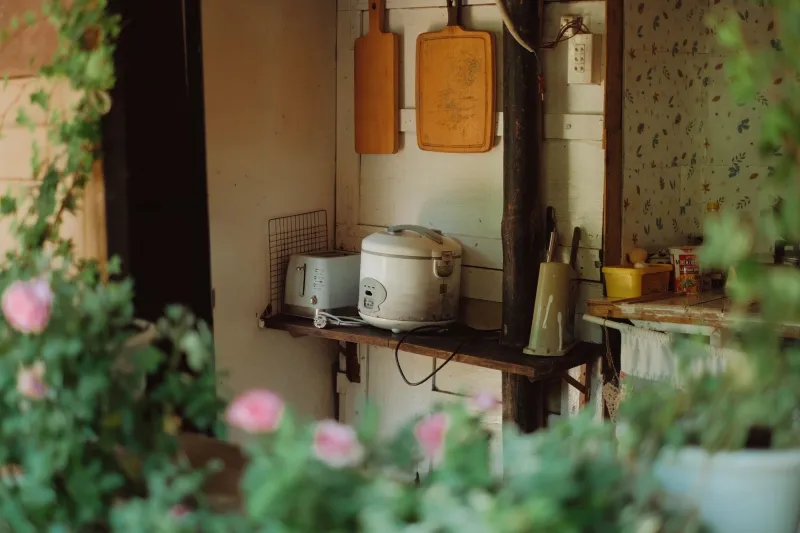
Let me start with a confession: when I packed up my life in Portland and moved into a 20-square-meter apartment near Tojinmachi Station, I nearly left my rice cooker behind. It seemed indulgent. It was big. It did one thing.
My Japanese coworker, upon hearing this, looked at me the way you'd look at someone planning to abandon a child at the airport. "You'll buy a new one," she said. Not a question. A prophecy.
She was right, of course. And what followed was a slow, slightly obsessive education in why the rice cooker isn't a gadget here — it's the kitchen.
The Aisle That Broke My Brain
My first pilgrimage was to the electronics shops clustered around the big stores near Fujisaki and over in Tenjin's denki-gai, a short hop on the subway from Tojinmachi. If you've never browsed a Japanese electronics store's rice cooker section, imagine the cereal aisle at an American grocery store, but every box is a different philosophy of life.
There were induction-heating models that cost more than my first car payment. There were "steam-capture" lids promising to trap every molecule of aroma. There were pressure cookers with more settings than my laptop. A patient salesperson walked me through the difference between ih-ka (induction) and micon (micom, or microcomputer) models, and I nodded like I understood, which I did not.
I walked out with a mid-range Zojirushi that cost about the same as a nice dinner for two back home. It has a handle on it, which means I can carry it to a picnic at the Muromi riverside, plug it into who-knows-what, and make people happy. That's a life upgrade.
The Midnight Takikomi Ritual
Here's where things got weird. Or wonderful. Depends on your tolerance for self-improvement via carbohydrate.
One rainy Tuesday, around 11 p.m., I had leftover chicken thigh, a half carrot, some shiitake, and a splash of soy sauce. My stove has two burners and the temperament of a scalded cat. Instead of fighting it, I threw everything into the rice cooker with the rice and water, pressed the mixed-rice (takikomi) button, and went to brush my teeth.
Twenty minutes later, my apartment smelled like a restaurant. Takikomi gohan — "mixed rice" — had quietly become my weeknight superpower. Since then, I've made clams and sake in it. Ginger pork over rice. A genuinely respectable congee when I was sick and pathetic. Once, ambitiously, a steamed sponge cake that my neighbor politely called "interesting."
The rice cooker doesn't just cook rice. It's a slow cooker, a steamer, a one-pot pasta machine, and a very forgiving sous chef for anyone whose kitchen is roughly the size of an American closet.
Why Americans Should Steal This Habit
Back in the US, we treat the rice cooker as a specialty item — something for people who eat rice daily, or for dorm rooms. I get it. The Instant Pot marketing machine convinced a generation that you need a dozen functions and a pressure valve.
But here's the case from a tiny Fukuoka kitchen: the rice cooker is the most honest appliance I own. You put food in it. You press a button. You walk away. There's no stirring, no watching, no "preheat until shimmering." It beeps, and dinner exists. It keeps things warm for hours without turning them sad, which means I can eat at 6 p.m. or 9:30 p.m. after a late shift, and the rice is still perfect.
For anyone living small — and Tojinmachi apartments are nothing if not small — the math is simple. One machine that reliably produces a hot, cheap, healthy base for a hundred different meals beats a drawer full of gadgets you'll donate in two years.
A Few Tips From the Newly Devoted
- Buy the keep-warm function. Non-negotiable. It sounds like a gimmick until you taste rice that's been held at exactly the right temperature for eight hours.
- Rinse your rice until the water runs mostly clear. My Japanese friends were horrified to learn some Americans skip this. It takes ninety seconds.
- Measure with the cup that comes with it, not your Pyrex. The Japanese cup (gō) is 180ml, and the water lines inside the pot are calibrated to it. Trust the lines.
- The mixed-rice button is your friend. Anything with soy sauce, mirin, and whatever's dying in your fridge drawer is thirty minutes from being dinner.
- Clean the steam vent. Ask me how I know.
The Centerpiece Nobody Expected
My Tojinmachi kitchen has a two-burner stove, a sink, and a rice cooker. That's the whole operation. And yet I eat better here than I did in a house with a full-size range, mostly because the rice cooker lowered the barrier between "tired" and "fed."
There's something quietly romantic about it, too. On cold nights, when the Muromi fog rolls in off the river and my windows fog up, the little machine hums in the corner and the apartment smells like dinner. It's the closest thing my 20 square meters has to a hearth.
So yes — the prophecy came true. I bought a new rice cooker. What I didn't expect was to fall in love with it. If you're moving to Tojinmachi, or just living small anywhere, do yourself a favor: make room on the counter. One machine. Endless dinners.