Twenty-Four Hours of Tojinmachi on Tape: What One Street Recording Taught Me About Living Small

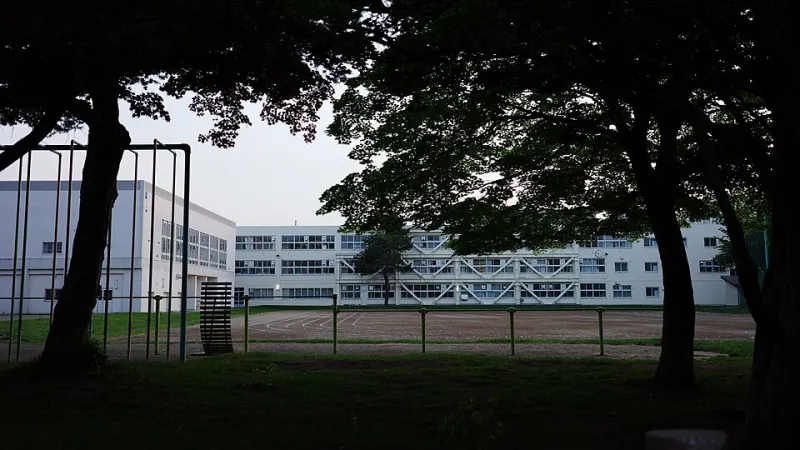
Photo: quiet japanese residential street at dusk with vending machine glow, via thumbs.dreamstime.com
I brought a $30 lavalier mic back from a trip to visit my parents in Ohio, mostly as a joke. My sister had asked what Tojinmachi sounds like, and I realized I had no idea how to answer. So one Tuesday in October, I set the thing running in bursts from sunrise to well past midnight, walking maybe four blocks total, and listened back the next morning over instant coffee.
What I got wasn't a soundscape. It was a schedule. The neighborhood's entire social contract, written in audio.
6:12 A.M. — The Shutters and the Radio
The day opens with metal. The shutter of the dry cleaner two doors down rolls up with a rattle you can feel through the floor of my second-floor walk-up, followed almost immediately by an AM radio murmuring weather and horse racing odds. The owner is maybe seventy. He never turns the radio past a volume that would carry past his own doorway — but his doorway is ten feet from my window, so I hear it anyway.
Here's the thing that surprised me listening back: it doesn't register as noise. It registers as someone's awake. In the suburbs where I grew up, the first sound of the day was a garage door and a car engine, which is a sound that says someone is leaving. Tojinmachi's first sound says someone showed up.
7:40 A.M. — The Train, on Repeat
The subway doesn't dominate the recording the way I expected. The trains to and from Nishijin and Tenjin pass under the neighborhood as a low pulse every few minutes, more heartbeat than interruption. What actually fills the morning track is footsteps — schoolkids in packs, someone jogging along the Muromi, the clack of a shopping trolley bag over a sidewalk seam.
If you've spent your adult life in an American city where you drive to a gym to walk on a machine, this is the part of the recording that will mess with you. Nobody in my morning audio is exercising on purpose. They're just outside, because everything they need is within fifteen minutes on foot.
The 4:45 P.M. Chime (Yes, That One)
If you've read my piece about the crosswalk melodies, you know the neighborhood broadcasts a chime at set times. On the recording it lands like a town crier with a synthesizer. Kids materialize. Mothers and grandmothers swap a sentence or two on corners. A man selling yakiimo from a truck with a speaker plays his lonely, beautiful song — the same one, I later learned, he's played for decades.
The chime is a shared clock. Nobody wears a watch for it; the neighborhood just tells you. Compare that to the American version of timekeeping, which is a phone buzz and a private calendar. One is communal, the other is a notification you can mute.
8:30 P.M. — The Izakaya Spillover
My favorite stretch of tape. Outside the little izakaya near the station, laughter rolls in waves — not raucous, just warm, the sound of a dozen people who mostly know each other's orders. A bicycle bell. A woman calling a goodbye that takes three tries because nobody wants the night to end.
Here's what it taught me about privacy, which I'd been getting wrong for months. Coming from the States, I assumed density meant less privacy — more people, less space, no buffer. But the privacy in Tojinmachi is temporal, not spatial. Your apartment is small, but the street absorbs your social life. You don't need a rec room or a backyard because the neighborhood is the rec room, and your twenty square meters stays quiet and yours.
In an American suburb it's inverted: big house, big silence, and every social event requires a plan, a parking spot, and a designated driver.
12:50 A.M. — The Can and the Hum
The last track is nearly silent. A vending machine hums. Somewhere, a can opens. A distant siren that fades before it resolves. That's it. For a neighborhood of thousands of people stacked in walk-ups, the midnight decibel count would embarrass any US cul-de-sac with a Tuesday trash night.
The Sound You Start to Miss
My sister visited in the spring and stayed in a guesthouse two streets over. On her last morning she said, unprompted: "I slept so well here. Is it quiet?" It isn't, really. It's just occupied — full of small sounds that mean things are where they should be.
I keep the recording on my phone now. When I'm back in the US, in a house where the loudest daytime sound is the HVAC kicking on, I play the 8:30 p.m. track. The laughter outside the izakaya. The bicycle bell.
Walkable neighborhoods don't just change how you get around. They give you a soundtrack, and once you've learned to hear it, silence — the American kind, the empty kind — starts to sound a lot like nobody's home.