The 4:45 P.M. Chorus: What Tojinmachi's Crosswalks Taught Me About Trusting a Whole Neighborhood
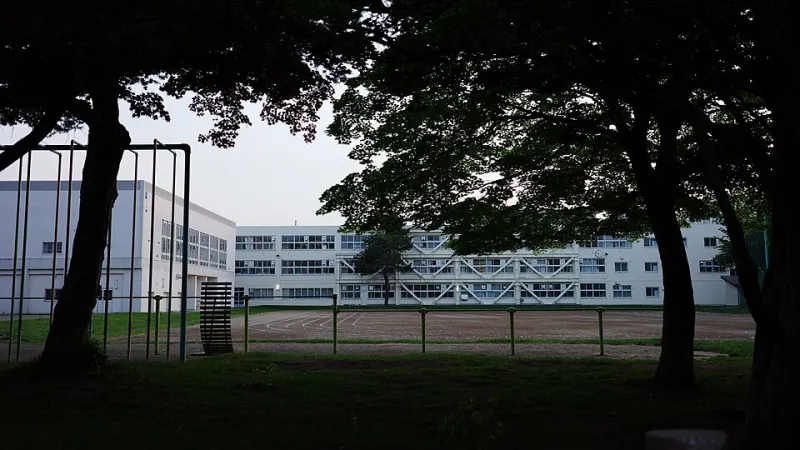
Photo: MIKI Yoshihito, CC BY 2.0, via Wikimedia Commons
4:45 P.M., and Nobody Panics
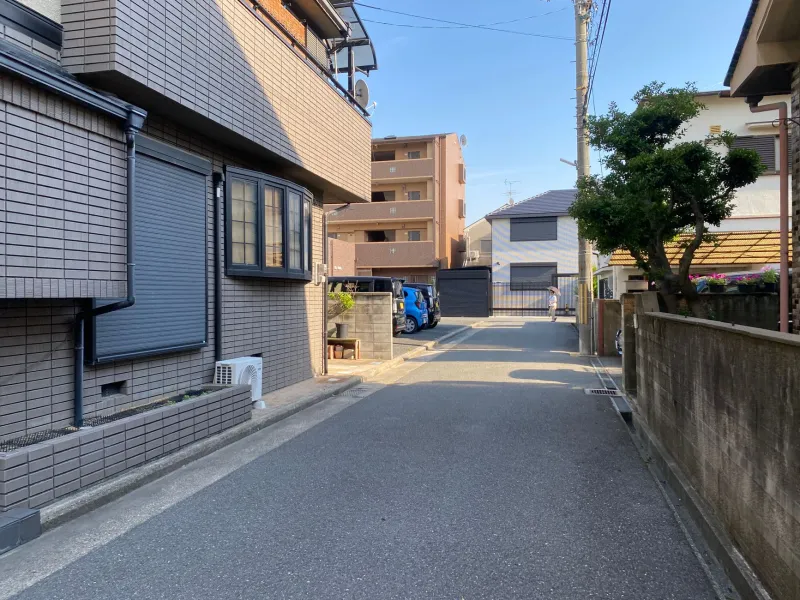
If you want to understand Tojinmachi, don't come at noon and don't come at night. Come at 4:45 on a weekday, when the school bell rings and the backstreets fill with an unmistakable sound: the clatter of randoseru backpacks, the squeak of bicycle tires, and the low-grade chaos of first graders negotiating who gets to cross first.
The first time I witnessed it, I did what any American would do. I looked around for the adults. The minivans. The crossing guards in reflective vests holding stop paddles like it was a military operation.
There were adults, sure. But not the way I expected.
The Watchers at the Corner
There's a retired gentleman — I've never learned his name, though we nod now, the way you do — who stands near the fruit shop on the corner most afternoons. He doesn't hold a sign. He doesn't direct traffic. He just stands there, hands behind his back, and somehow that's the whole system.
Then there's the lady from the laundry who steps out onto the sidewalk at exactly the right time, as if her washing machines run on the school schedule. The yakitori guy sets up early and keeps one eye on the intersection. The obachan at the produce stand will call out a correction — gently, loudly — if a kid is about to do something dumb with a bicycle.
In Japan this idea has a name that doesn't translate neatly: mimamoru, to watch over. Not supervise. Not guard. Watch over. It's a verb the entire neighborhood conjugates daily, and nobody gets paid for it.
For someone who grew up in suburban America — where the school pickup line is a genuine logistical operation involving cones, staff, and laminated name cards — it looked like negligence. It took me a solid year to recognize it as the opposite.
The Walk Home as a Curriculum
Here's the thing that surprised me most: the solo walk isn't an accident of a low-crime district. It's a feature, deliberately built into how kids here grow up.
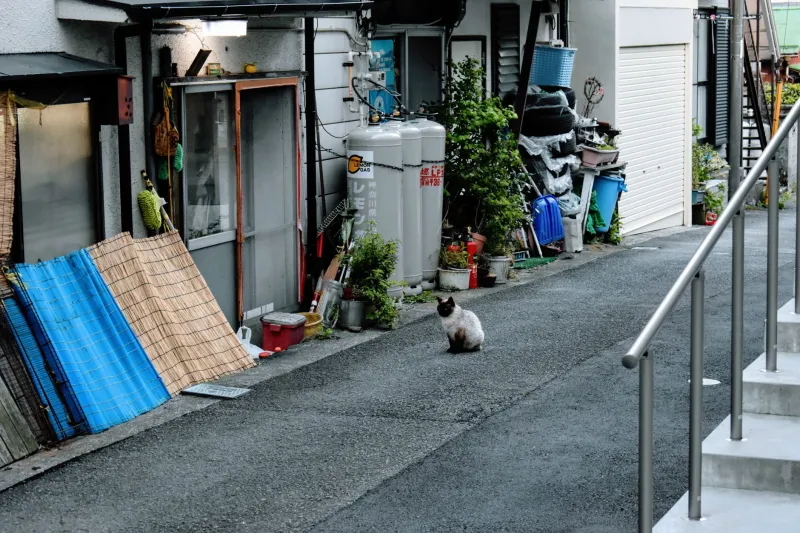
Elementary schoolers in Tojinmachi walk in small groups called han groups, older kids shepherding younger ones. The routes are agreed on with parents and teachers. Kids practice the walk before first grade even starts. And along every route, the neighborhood has quietly pre-enrolled itself: shops where a child can duck in if something feels wrong, homes with stickers in the window marking them as safe harbors, corners where somebody reliable tends to be.
It's a distributed safety net with no central authority. The fruit shop owner didn't take a course. The laundry lady didn't sign a waiver. They just live here, and this is what living here means.
Compare that to the American model, where safety is purchased individually — car seats, cameras, GPS watches, a pickup line that backs up traffic for a quarter mile. One system outsources trust to institutions and equipment. The other distributes it across every person on the street.
But Is It Safe? The Question Every American Asks
I know the objection, because I made it myself. Japan's crime statistics are genuinely different — violent crime is rare, and Fukuoka's residential districts like Tojinmachi are about as far from the nightly news version of danger as you can get. Kids here aren't walking home through a war zone. They're walking home through a neighborhood where the biggest hazard is a delivery scooter cutting a corner.
But I don't think the crime numbers are the real story. Plenty of American suburbs are statistically safe too, and kids still get driven four blocks. The difference isn't danger. It's who is allowed to be responsible.
In the US, responsibility has collapsed onto parents — and only parents. Let your kid walk home alone and you're not just taking a risk, you're risking a call to CPS. In Tojinmachi, responsibility is shared so broadly it's almost invisible. When a six-year-old crosses the street, there are six adults implicitly on duty: the driver who slows, the shopkeeper who glances up, the fifth grader who grabs a sleeve.
Nobody is the guardian. Everybody is a guardian.
What the Crosswalk Actually Teaches
I've started standing at the corner near the fruit shop on afternoons, partly out of laziness (it's on my way home from the station) and partly because it's the best free theater in the district. And I've noticed what the kids are learning that no classroom teaches:
- They learn they're seen. Not surveilled — seen. There's a difference, and it matters.
- They learn judgment. Every crossing is a small decision, made without a parent's voice in their ear. They get hundreds of reps.
- They learn obligation. The fifth grader holding the first grader's hand today is the fruit shop owner in thirty years. The loop closes.
And honestly, the adults learn something too. I've caught myself doing the laundry lady thing — stepping out at 4:45, scanning the corner, offering a nod. I didn't sign up. I just live here now.
What I'd Bring Back Home
I'm not going to tell American parents to loosen up based on one Fukuoka neighborhood; the contexts are different and pretending otherwise is how bad takes get written. But I will say this: standing at these crosswalks, I realized the American version of safety asks "how do we protect this child?" while Tojinmachi asks "how do we build a street where protection isn't necessary?"
The second question is harder. It can't be bought, and it can't be scheduled into a pickup window. It accrues slowly, one nod at a time, one shopkeeper who knows which kids belong to which route.
But the payoff is a sound you can't get anywhere else: 4:45 P.M., a school bell, and a hundred kids walking home like the whole neighborhood is theirs. Because here, it is.
If you're new to Tojinmachi, do yourself a favor: skip the station exit at rush hour and find a backstreet corner at 4:45 instead. Watch the chorus go by. Then stand there long enough that somebody nods at you.
That nod is the whole system working.